Four Real Options, Not Two
"Scrape it or cover it" is how the question usually gets asked, but there are really four legitimate paths, and they have genuinely different costs, results, and consequences. In rough order of how much of the old ceiling ends up in a dumpster:
Scrape and refinish
Wet the texture, scrape it off, repair and skim-coat the bare drywall, then finish smooth or with a light texture and paint. The permanent fix — the old material is gone.
Skim-coat straight over the texture
Joint compound applied directly over sound, unpainted, lightly textured popcorn to flatten it out. Fast and cheap when it works; it does not work on everything.
New drywall over the old ceiling
Quarter-inch or three-eighths panels screwed through to the joists, then taped, finished, and painted. This is also the standard encapsulation route for asbestos-positive texture.
Plank, panel, or beam systems
Tongue-and-groove planks, beadboard, PVC or tin panels, or a coffered/beamed treatment installed over the existing ceiling. A design decision more than a repair.
Side by Side
| Approach | Typical cost | Best when | Main drawback |
|---|---|---|---|
| Scrape + refinish | $3–$6/sq ft finished | Texture is unpainted and tests negative | Messiest; longest schedule |
| Skim coat over | $1.50–$3.50/sq ft | Light, sound, unpainted texture | Fails on heavy or loose texture; still disturbs it |
| Drywall over | $2–$4.50/sq ft installed | Painted texture, or a positive asbestos result | Loses ~¼″ of height; fixtures must be extended |
| Planks / panels | $1–$5+/sq ft material | You actually want that look | It's a style, not a smooth ceiling — and tastes change |
Ranges are national planning figures adjusted for the Tucson market; see our Tucson cost guide for how project size and ceiling height move these numbers.
Option 1: Scrape and Refinish — The Default for a Reason
When the texture is unpainted and the lab says negative, scraping is almost always the right answer. Wet popcorn comes off in soft ribbons, the drywall underneath is usually serviceable, and you end up with the ceiling the house would have had if 1974 had better taste. Nothing is added to the assembly, nothing has to be disclosed later, ceiling height is unchanged, and the fixtures, vents, and can lights stay exactly where they are. You also get a full look at the drywall — which is a feature, not a bug, since old truss-lift cracks, popped nails, and monsoon water staining come to light and get properly repaired instead of being sealed in.
The honest downside is that it is the messiest interior remodeling job in common existence, and the finish quality lives or dies on the skim coat, not the scrape. That's the skill you're actually paying for.
Option 2: Skim Coating Over the Top
Applying joint compound directly over popcorn is a real technique, not a shortcut invented on the internet, but it has a narrow window. It works on thin, well-adhered, unpainted texture where the nubs are shallow enough to bury under two or three coats. It fails on heavy 1970s "cottage cheese" — the compound just sags and telegraphs the lumps — and it fails where texture is loose, because you've now glued a heavy wet layer onto something that was already letting go.
Critically: skim coating is not a way around an asbestos result. Troweling over the material scrapes and abrades it, which is disturbance. If your ceiling tested positive, this option is off the table.
Option 3: Drywall Over — The Underrated Middle
Screwing new panels over the old ceiling gets you a brand-new, perfectly flat plane without ever removing the popcorn. It's the standard play in two situations Tucson homeowners hit constantly: texture that's been painted two or three times since the Carter administration, and texture that came back positive. In both cases, covering is often meaningfully cheaper than the alternative and produces a better-looking result than fighting a stubborn scrape.
What to know going in: quarter-inch panels add roughly a pound and a quarter per square foot, so the framing should be looked at rather than assumed; you lose about a quarter inch of ceiling height, which nobody notices but which matters at crown molding and door casings; and every can light, ceiling fan box, smoke detector, and HVAC register has to be extended down to the new plane. That fixture work is where the budget actually goes.
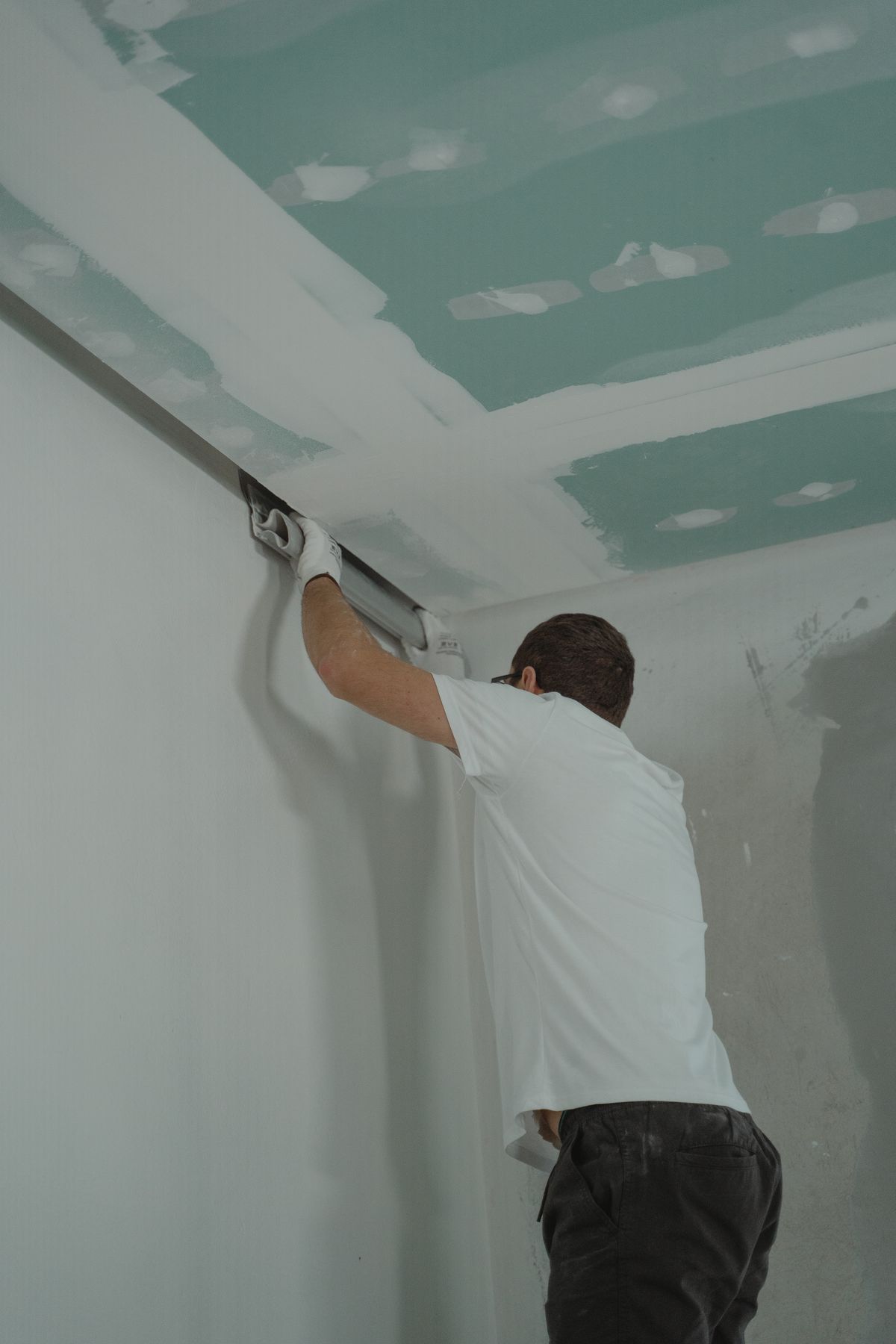
One nuance worth raising with your pro: screwing through asbestos-containing texture is still a small disturbance of the material. It is a far cry from scraping a whole room, but a careful contractor will wet the fastener locations, control the debris, and know the difference. Anyone who shrugs at the question is the wrong contractor.
Option 4: Planks, Panels, and Beams
Tongue-and-groove planks, beadboard, faux-beam grids, and PVC panels all cover popcorn permanently and can look genuinely great — especially in Southwest and ranch-style Tucson homes where a wood-clad ceiling reads as intentional rather than as a repair. Material costs are low, and much of this can be installed over furring strips without touching the texture much.
Be honest with yourself about what you're buying, though. This is not "a smooth ceiling, cheaper." It's a different ceiling. It commits every future owner to that look, it can make a low 8-foot room feel lower, and where seams meet the wall the detailing matters a great deal. If your goal is resale-neutral and modern, drywall over is the safer covering choice; if your goal is character, planks are a legitimate and often lovely answer.
The Asbestos Fork in the Road
Everything above is downstream of one lab report. If the texture tests negative, all four options are open and you're choosing on budget and taste. If it tests positive, scraping means licensed abatement at roughly $5–$20 per square foot, and covering — leaving the material intact and sealed behind new drywall — frequently becomes the better economics by a wide margin. On homes built before about 1989, get the answer before you get attached to a plan. Start with whether your ceiling is likely to have asbestos and then how testing works in Arizona.
How Tucson Houses Change the Calculus
A few local realities push the decision one way or the other. Single-story ranch homes across Midtown and the east side make scraping cheaper here than in two-story markets, because there's no scaffolding or stairwell gymnastics — that nudges toward removal. Vaulted great rooms in the Catalina Foothills and Oro Valley push the other way, since both scraping and hanging drywall overhead at height cost more per square foot. Older Green Valley townhomes and condos frequently have low 8-foot ceilings and HOA or party-wall considerations that make the quarter inch and the dumpster logistics worth thinking about. And our dry air genuinely helps a scrape-and-skim schedule, since joint compound flashes off faster here for most of the year.
When You Probably Don't Need a Pro
If the texture tests negative and you're dealing with a small, forgiving space — a laundry room, a hallway, a closet, a guest bath — scraping it yourself is reasonable and thousands of people do it every year. The tools are cheap and the technique is learnable in an afternoon. What changes the math is square footage, height, and visibility: big open rooms under wide-angle light punish an amateur skim coat, and drywalling a ceiling overhead is genuinely hard, heavy, two-person work that most homeowners regret starting. A common and sensible split is to scrape the easy rooms yourself and hire out the finishing and the big spaces.
Removal vs. Cover-Up FAQs
Which option adds the most resale value?
Buyers respond to the finished look, not the method, so scraping and drywalling over land in about the same place. What matters more is that the result is flat, uniform across adjoining rooms, and cleanly painted. See selling with popcorn ceilings for the resale math.
Can I just paint over popcorn instead?
You can, and it freshens a dingy ceiling, but it makes future removal significantly harder because paint seals the texture against the water that makes wet scraping work. If removal is anywhere in your five-year plan, don't paint it first.
Will covering the ceiling cause problems for the next remodel?
It adds a layer future electricians and HVAC techs have to work through, and if asbestos texture is sealed underneath, that should be disclosed so nobody cuts into it blind. Keep your lab report and a note about what was done with the house records.
Is drywalling over a ceiling safe for the framing?
Usually yes with quarter-inch panels on standard joists or trusses, but "usually" isn't "always" — long spans, prior sagging, or an existing double layer are all reasons to have someone actually look before adding weight.
How do I decide if I can't make up my mind?
Get one quote that prices scrape-and-refinish and cover-over side by side on your actual ceilings. Seeing both numbers for your house usually makes the decision obvious in about thirty seconds.
More Tucson Ceiling Guides
See Both Numbers for Your House
Ask for a free quote that prices scrape-and-refinish against cover-over on your actual ceilings. Seeing the two figures side by side usually settles it immediately.